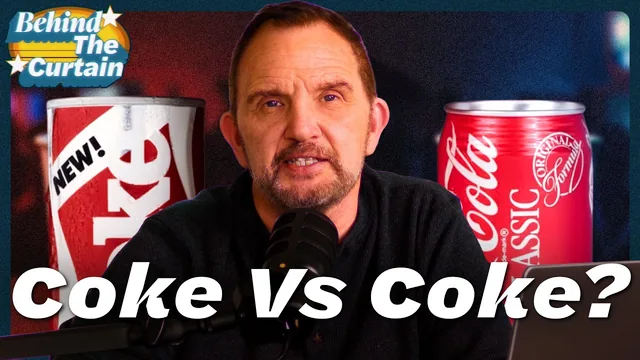
How Pepsi Got Coca-Cola to Blink
00:24:46
Summary
In 1985, the most recognized brand on the planet voted to abandon a 100-year-old formula and taste more like its biggest competitor. New Coke lasted 79 days.
But the story doesn't end there. From mid-calorie launches to AI-generated Christmas commercials, Coca-Cola has spent five decades learning the same lesson its customers keep offering for free. This is what happens when a market leader starts chasing number two, and why it matters for your business.
Links:
Learn More: https://www.exposure.marketing/
Get your free Blueprint: https://www.exposure.marketing/blueprint/landing
Chapters:
00:00 - Why Coca-Cola changed its formula
01:12 - The definition of insanity in business
02:42 - Why only the top 2 brands get remembered
05:24 - The Pepsi Challenge explained
07:29 - Coca-Cola's boardroom vote on New Coke
12:19 - New Coke launches, original pulled
14:21 - The New Coke backlash and Coke Classic
18:57 - Coca-Cola's AI Christmas ad backlash
23:12 - What businesses should learn from New Coke
Follow us on socials:
https://www.linkedin.com/company/exposure-marketing-team/
https://www.tiktok.com/@exposure.marketing
https://www.facebook.com/exposure.marketing.team
https://www.instagram.com/exposure.marketing/
Transcript
YouTube automatic captions · English. May contain transcription errors; not manually reviewed for this website. Select a timestamp to play that moment in the video above.
Read full transcript
100 years, the number one brand in the world, the most recognizable company on the planet, the biggest market share ever created by any company. And one of the board members goes, >> "We are currently being attacked by Pepsi Corporation. They're beating us on flavor and I think we should change the formula. >> New Coke, new Coke. New Coke. New Coke. New Coke. We're coming with formula. You're gonna love it. Taste." And they were trying to be Pepsi. Think about that. You're the number one company on the planet and now you're trying to be the number two and be sweeter. When you
held the ground, you didn't lose first place to Pepsi. You weren't even going to. I'm not even going to talk about who the spokesperson was. >> Best tasting Coke in the history of ever. >> That does not hold well. It does not age well. Hi, and welcome to another edition of Behind the Curtain, your Wizard of Oz metaphor to start your day or get you through lunch or maybe near dinner. Maybe it's put maybe maybe we put you to sleep. It's it's happened. We've we've had we've had quotes and comments about this is great, but right, but today, oh my gosh, every
person has heard this phrase at some point, either through a motivation or through a company, um through your boss, through a significant other, through somebody you work with. The definition of insanity. Businesses do this every day. Now, I'm not talking about the definition. I'm going to show you in real time how the number one brand in the world did it. and basically shot themselves in both feet, the back of the foot, the ankle, and the Achilles heel. I'll give you an idea what I'm talking about. The definition of insanity is doing the same things over and over again and expecting
different results. That has been given in variations from Einstein to Zig Ziggler to everybody. It's pretty much a phrase that says if you do the same things and you want different results, then you should change your thing to get new results. But don't do that. Keep doing the same thing and then expecting that because you willed it, it'd be doing something else. Now, why is that important? the number one iconic brand in the world spent 40 years doing it over and over and over again. Not only that, it shares the fact that it um probably cost them somewhere in the
neighborhood of um a hundred billion to 500 billion dollars because they couldn't get out of their own way. And yet to this day, people love the product, people love the company. But you have to understand it's the erosion of the trust, erosion of the ability to make things happen. And I'll and I'll walk you through it because this case study, this could be your business in a completely different scale. And the irony is this is a cautionary tale in real time. Easiest version to learn about this. There's a great book called Swim of the Swim of the Sharks being eaten alive by
Harvey Mccay. One of the first books I ever read way way way back. That makes me really freaking old. Um, if I go back and find the first edition that's signed by Harvey Mck. No, it's I've got I've got an old version of the book, original printing if you will, depending on who you're asking. But the book said in there, you can usually tell me the first and second company in industry, but you really can't tell me the third. And that led on the psychology of people don't want to deal with the fifth place company. They like to deal with the companies that are first or second. Now,
the whole strategy in that we'll talk in a completely different video, but for the purposes of this, it hit me at that moment that Coke was number one, Pepsi was number two. Who's number three? Now today a lot of those are conglomerates of owned by different companies and different places but very rarely do we know which the third soft drink or sugary water drink company is. But that was okay because what we knew was Coke and Pepsi. And in the 70s, 1970s, by the way, for those of you that are a little uh younger than that, back in the day in the 70s, there used to be a competitive
environment where on TV they would have commercials and they would fight against each other live. But really here's what happened. For 40 years, actually almost 50 years now. Holy crap. For 50 years, Coca-Cola has been trying to reinvent the wheel. They already created it. They created the wheel. They created the original. For a hundred years, they had ruled the entire roost. And a company called Pepsi was always trying to cut in. Let's go back a little bit and I'll I'll layer this in the best I can because to me it is one of the most beautiful poetic just
and sad stories of genius and making money simultaneous. Now what's the lesson for you? You take away from it that when you've got something working you don't reinvent the wheel. I mean we've all heard it, right? But even the best company, number one company in the world heard it, didn't do anything about it. mid70s Pepsi is trying to fight to get into the market in a much more robust way. Coca-Cola dominates. I mean at the time Coca-Cola was the most recognized brand in the world. In fact, statistics show that the only English word that everyone
else knew and recognized what it meant was the word okay ahead of Coca-Cola around the world. Domination. I mean, pure domination. Same formula. Nothing's changed. Just keep going. Just keep plugging ahead. Don't fix it. Don't change it. Don't don't don't add to it. Just go. You keep going. Keep people happy. You're gonna be fine. Pepsi Pepsi had other ideas. They did not want this to go. And what they figured out through a either science or some studies or something. For those of you old enough to remember, you can for those of you young enough, you can basically go and
Google this. You the Googlers, the gies in in YouTubers and the internets. You can go to Google on YouTube and you can see these commercials. They created something called the Pepsi Challenge. Now, the Pepsi Challenge was an in-your-face kind of let's become disruptive, which is what we teach every client, by the way, um to go into the world and absolutely disrupt the market and see if you can get attention. Because you're doing it not by telling somebody else something is bad or not good. You're doing it saying, "Can we compete at a level live? And if we can,
let's show the world that we do that because then the world world will align with whatever side they like best." So, here's how it begins. Pepsi challenge. They took two white cups. They would do live testing in small towns and cities around the area, test markets, whatever it was. Two white cups. One had Coke, one had Pepsi. And the idea was as soon as you take, you get one sip. As soon as you taste one sip, you tell us which one you like better. Now, the reason they did the one sip was because there's scientific proof that over time certain pellets create
certain things. But the one sip test was that Pepsi's massive advantage. Why? Four out of five, nine out of 10 roughly almost to a consistent basis, people picked Pepsi over Coke. Now, the science behind it is that uh well, kind of it's got a sweeter taste. It's got a more citrusy taste and the tongue picks it up quicker. The problem was the minute they had great traction with this, they start marketing this nationwide. Everywhere you looked, Pepsi, the Pepsi challenge became like an icon thing. It became a cultural thing. People were testing it
at home. People were doing it, seeing if it actually was real. And by doing it, they were proving the point. Four to five people consistently, three out of five people consistently, three and a half people out of five people consistently said Pepsi tasted better than Coke. And it wasn't technically better. It was sweeter or more citrus. But that didn't matter. The minute someone said, "I picked that one." And by the way, a ton a ton I don't have the statistical now, but a ton of former Coke drinkers would say, "Oh, that one tasted better or that one got my
attention first." And that was driving Coca-Cola absolutely nuts. So Coke immediately decides we're going to change the idea of what we're doing. We are still number one. Pepsi didn't really take anything away. Pepsi were cutting into that whole kind of thing. And what Pepsi was doing with its marketing, they came up with a brand new slogan. Pepsi, the choice of a new generation. So what they were doing is two things simultaneously. One, disrupting the market for taste, and two, saying, "Hey, Coca-Cola is your granddad or your grandma or your mom's
drink. Hey, new generation. Hey, new8s kids. Hey, new young people. You want to drink Pepsi cuz Pepsi's cool." And we won't even get into the fact that they hired one of the greatest pop stars of all time to basically get in there. But some of you don't remember the story, the hair thing. But let's get there. So, as a result, Coca-Cola goes, "All right, we have to do our own tests." Why? Pepsi's killing us. They're they're get they're taking us. And what really was is it's an emotional response to a logical problem. Emotional. I don't like the fact that Pepsi is able to show that
we're not better than they are in the marketplace. We're going to do our own study test. And what happened was their own studies confirmed. Now, they did them secretly. Didn't tell anybody to do it. They confirmed that when you taste Pepsi first, it did taste sweeter. So immediately immediately all the studies go back and this is the craziest part of all. Okay, I want you to imagine a massive boardroom, big mahogany desk, big beautiful leather chairs, the greatest minds of Coca-Cola sitting around the board of directors at Coca-Cola. Oh, what comes next is just nuts.
Because to this day, I laugh every time I think about it because you have to understand what's happening. The emotional play was overriding the logical play. And the emotion, emotion equals cost. I teach every client, if you get emotional about something, it's going to equal cost. Let me prove it to you in real time. At this time in the board of directors, there was an absolute meeting. Now, if some of you are familiar with the Robert's rules of order in a corporate environment, in a board of directors meeting, what usually happens is we have basically
introductions. We have um old business. It's an old business is the first thing that we clarify because that's the business from the last meeting and things that we need to take care of. And at some point, somebody says, "I think we should move on." Usually the director or the person in charge of the board meeting says, "It's time to move on to new business." Do we have any emotions? Now at this point you have to remember 100 years the number one brand in the world the most recognizable company on the planet the biggest market share ever created by any company and one of the
board members goes I have an idea and I keep laughing because you have to think this is billions billions of dollars even back then. So, put it in perspective. I think based on the current environment that we are currently being attacked by a Pepsi Corporation, they're beating us on flavor and I think we should change the formula. Now, on the surface, that's one of those things that says, "Okay, that's that's very nice." Now, the first thing you have to understand, when you make a motion at a board meeting, somebody has to second it to make it real. So,
somebody had to go in this room and go, "Well, that's a great idea. I second the motion. We've been the best company for a hundred years. It's time to change the formula. Now the discussion happens. They talk about the reality. They talk about the things that are going on, the reasons why we've been made the motion. And here's our statistics. Here's our survey. It says the same thing. And we're going to jump right now because our survey proves the same thing Pepsi's been saying that Pepsi tastes better than Coke. When no one ever asked the question,
what happens on the second or third sip? What happens on the fourth sip? No one asked it. So they went with the first first thing first. They jump to a conclusion with the first thing. I said, I know it's not jumping to a conclusion if you do a study, but it kind of is if you don't do multiple levels of studies. Every scientist will tell you you got to have multiple sets of study. But here's the point. At that moment, they take a vote. Now, I don't know what the Roberts rules of order and the quorum is for Coca-Cola and the board of directors in
the 70s, but I do know this, right? 70s and 80s. But I do know this. Um, you had to have at least majority agree. So imagine we're getting beat by Pepsi. I move that we change our formula, the most coveted formula in the world over 100 years. Someone goes, I second that. I do not like being the thing. In fact, what our goal is right now is we're now going to vote. And the vote carries majority to create a new formula. And in effect, they voted, we are the number one company in the world. Let us now vote to see if we can be number two. I'm just going to let that sit because
to this day, one of the most costly decisions ever because people were getting emotional about their business. So, what happens? They immediately move into New Coke. Now, for those of you old enough to remember, I'm not even going to talk about who the spokesperson was cuz that does not hold well. It does not age well. But understand, for months, New Coke, New Coke, New Coke, New Coke, New Coke, we're coming with formula. You're going to love it. Tastes And they were trying to be Pepsi. Think about that. You're the number one company on the planet and now you're trying to be
the number two and be sweeter when you held the ground. You didn't lose first place to Pepsi. You weren't even going to. But all of a sudden, imagine now Pepsi's got this new slogan, Pepsi the Choice New Generation, and you lay right, you literally walk right into it, right? In fact, the Pepsi CEO at the time, uh, later on as they retired, he wrote a book called, um, the other guy blinked. And all they were doing was trying to get Coke to blink. And Coke blinked. So, you know what? Now they got new Coke. Here's the crazy part. Hundreds of millions of dollars in
marketing. Hundreds of millions of dollars. In fact, they stopped production of Coke, Coca-Cola, the original. They stopped production. And the funny part is now they're going they're betting everything betting everything on new Coke. There's no there's no research. There's no background. There's no AI. There's no internets back then to do this. They're just going we're going to go beat co Pepsi by being the same as Pepsi. What? Okay. So, it's launched. Now, for those of you old enough to remember, and uh I don't think you can get the taste anymore, and I
don't know about you, but thank goodness you cannot even get a can of New Coke anymore because when it came out, it was absolutely reveriled. Uh reviled or nobody liked it. I'm going to use I'm going to use smaller words now, okay? Nobody liked it. You know what that means? They spent all this money, all this research, and you think years and years and years and years, hundreds years of of of just brand loyalty, brand things, and they come and tell their customers, "No, you got to drink this new thing." They didn't even give the option to have the
original. They just said, "Drink the new stuff." Which immediately erodess trust, does everything opposite of what you've been trying to do for a hundred years. Um, and in that moment, all that money spent, all that inventory, all those warehouses full of stock, you want to guess how long it stayed on the market before the market said, "Go jump in a lake. Go screw yourself. We're not drinking your shit." 79 days. 79 days. Within that time frame, you can bet that same board of directors goes, "We need another emergency meeting. I move that we go back to the original
formula. I'd like to go back to being number one again, too, please." All in favor? I. emotion carried except for one thing. At the same time, the original formula had been changed just before this. Now, they'll talk about losing form on what it really boiled down to is they'd switched from cane sugar into um high fructose corn syrup. Um so, when the new when the new original Coke came out to replace new Coke, which would now be the new version of Coca-Cola, it also didn't taste the same as the original. And that's one of the things we found as a great and by
the way go Pepsi, right? For that purpose because they really really I mean as a brand they really really drove home the fact that Coke was just spinning its wheels. But here's the crazy part. So now imagine as a marketing company, as a branded company, you've now got to figure out how this whole brand new thing didn't look right and you've changing your mind. You're going back. You would basically have to go based on popular demand, based on um absolute clarity, based on the fact that our customers have spoken and they say we want the old formula back. You have
to give a reasons why you sucked at basically getting the message out and getting this new formula out. So they figure it out. Now they have to go, what are we going to call it? We can't just go Coca-Cola again. Excuse me. So they go, all right. So they can't they can't call it old Coke because old Coke's sounds like you're going to drink old shoes. So they came up with Coke Classic and to this day Coke Classic is now still number one um in that positioning market. But the funny thing was if you say take those numbers of years the getting under the
skin of Coca-Cola. Pepsi doing the brilliant job of disrupting creating a market share creating a a dynamic creating a message those things are important. Those things are important. They didn't say Coke was bad. Not once. Not once did they say Coke was bad. Pick us over Coke. They said you know choice of new generation. Hey, you know, here's here's what the tests prove that we taste better in one test. Never once did you see anybody take a second or third or fourth sip in those tests because at the end of the day, that wasn't their purpose. The purpose was let's disrupt
the market. And they did. Coca-Cola has been feeling the pain ever since. And I would love to tell you that's the end of the story. Why? Because that should be all that we're talking about. Right? The actual quote that came out that I I wrote to this and Coca-Cola has spent the better part of 50 years and somewhere north of 100 billion in destroyed value. Not just the costing, which could go into the hundreds of billions of dollars, learning the same lesson their customers tell them for free every time. Stop trying to be your competitor. The really insane part isn't
that they keep making this mistake. It's that they keep being surprised when it doesn't work. I'll give you an example. They didn't stop there. Let's go through the process. Right? From that moment on in 1985, New Coke tobacco, right? Then in 2004, they created C2. Now, before you say to me, is that like C3 and PO? That is not it's C2. And by the way, today's a good day to actually have a Star Wars joke in the recording of this time frame. So anyway, if you get that reference, you'll know what day this video was recorded. So in the years to come, when you look back, Yes. Right.
So C2 was a mid-calorie launch. Boom. Died like almost instinctively. Cost another 50 million to $100 million. 2006208 Coca-Cola um launch and uh pull which was basically the blue 010K pull whatever that was but it didn't work either. In 2011 they went to Christmas cans and they created Coca-Cola the red and white cans they made white. There was no confusion whatsoever with Diet Coke except everybody confused it with Diet Coke because instead of taking a red can and adding some green to it to give it a Christmas feel, they went let's go with a white snow version even
though we have Diet Coke. Did not work at all. Cost about another uh 10520 million. Taste the Feeling was a marketing campaign in 2017 replacing open happiness. Um and the funny thing is campaign spend on a tagline that didn't even stick. So again, changing what was working, another $100 million. And we can keep going to 2021 Starlight. We're not going to get into it. 2023, um the Y300 AI flavor. They actually in 2023 let AI create a flavor that you know, everyone loves AI. Let's let let's let it make a flavor for us that you can taste. Taste the real AI.
And then, not to be outdone, they wanted to be so cutting edge that in 2024, they created their first AI commercial for Christmas. Now, I don't know if you're like me and how long you've been in this world about doing stuff, but if you grew up with those beautiful polar bears sliding down the mountains, you know, um, and it's the real thing and the the Christmy, the feeling and everything that was created in those beautiful Christmas commercials that, you know, they just go on. There's one where the guy was the truck driver and he has to get home to see his
daughter because she put in a letter in the Christmas. Those were beautiful because when you create and use creative creative people, creators of of ideas and concepts, you end up with feelings, you end up with emotions, you end up with connection. So Coca-Cola, who had not obviously learned its lesson in 40 some odd years, goes, "Why don't we be the first to adopt AI?" Now, I want you to hear this in real time. Coke's the real thing. >> It's the real thing. >> The real thing. The real thing. >> The real thing is what the world wants today. >> Except it's commercials.
>> How mixed message, how brutally against the messaging are you when you use artificial intelligence to do a commercial for the real thing? Man, oh man. I don't know how much they were paying those people, but I would have done it for half the cost and made sure they never did it. But here's what happened. They produced the ad. The ad went out and it got the backlash exactly as you basically talked about or I'm talking about here. And when I say backlash, I mean people don't stop drinking Coke. They just want you to know because they got voices now because
the way things work today, everyone's got a voice and everyone should have a voice, right? Whether or not it's a good voice or not, that's just subjective. The point being is that they heard about it and they listened. And Coca-Cola is a company that responds because the definition of insanity of doing the same things over and over again is not about Coca-Cola unless it is. And I'm not trying to harp on Coca-Cola. I'm just trying to give you examples of how even the best in the world can make the simplest mistakes. And you may be making them every day. So, let's just avoid
them. Why? Because in 2025, after all the criticism, after all the backlash, after using AI to create a commercial for the real thing, Coca-Cola said, "We're not going to make the same mistake, except we're going to because they did another AI commercial." Now, if you learn anything from that one sentence in your own world, in your own business, you listen to your comments. You listen to your customers because when your customers feel heard, they stay with you because then they believe you're part of your tribe or your group or your your ecosystem. They believe
part of the family. Almost every one of our clients gets that let's make sure everyone feels like they're part of the family because when you're part of the family, you back the family up. You got your family's back. But when you take your customers and clients and they tell you blatantly don't do that again and you do it, then the loyalty is broken. The trust is broken again. They did it with the formula. They did it with the ideas in between. They did it with the AI. Now Coca-Cola had a strong enough brand where they are actually in the place today where they still are one of
the most recognizable and iconic brands in the world. Now a lot of tech companies, a lot of the companies like uh you know the phone people and telecommunications people have jumped ahead of them. But if you actually understand this, Pepsi figured out a couple of things. They actually started diversifying in that portfolio. And today, um, the numbers show that Pepsi has a 2x revenue stream over Coca-Cola, the choice of a new generation versus the real thing. But when the real thing didn't seem real at all or was being utilized by artificial things to make a
real feeling, there was no connection whatsoever with the target audience or basically their best customers. So, what's the moral of the story? If it ain't broke, don't fix it. You've heard it a thousand times, but this is a real live example of that. Second, if something's working, keep doing it. The definition of insanity is doing the same things and expecting different results. So, if it is working, keep it going. If it ain't working, figure out what the message is. Figure out how to connect to the audience. Take the time in your business to care about the people. You're going
to hear this like throughout every one of these videos. Every one of anything I ever record, you're going to keep saying your customers will give a about your product or service when they feel that you give a about them. And what that is is listening. It's doing. It's catering. It's moving in. It's creating the customer experience. It's being trustworthy. It's being when you have a message, I can believe it. Our entire market model, we're building a blueprint for our client is based on what we call singular message marketing because you can't screw it up. What that
means is across every part of your perimeter, every part of your messaging, every part of your marketing says the same thing. So people go, "Okay, I get it. There's continuity. I get it. You believe in this. I get it. You are staunch in your belief in how you're helping your customers." And at the end of the day, wasn't about profit. Doesn't matter what your competition's doing because the minute you buy into what your competition's doing, that means you believe you have competition. How about how about you make your company, your product, or your service the one
everyone tries to compete against, not the other way around. What? Yeah. Take lead. Take lead. Be the company you want to be. Be the servicing you want to be. Be the customer experience that you want your customers to experience. And no matter what, be the real thing.
Presented by Exposure Marketing.